

-
On July 8, 2026
Why Timber Frame Housing is the Sustainable Future We Need
In the face of escalating climate challenges, the call for sustainable living has never been more urgent. “Zero Carbon Living: Why Timber Frame Housing is the Sustainable Future We Need” explores the transformative potential of timber frame homes. With their remarkable energy efficiency and minimal environmental impact, these structures represent a significant step towards carbon neutrality.
Unlike traditional building materials, timber not only sequesters carbon but also boasts natural insulation properties that reduce energy consumption. As we strive for greener lifestyles, embracing timber frame housing offers a practical solution that aligns with both eco-conscious values and modern design aesthetics. Join us as we delve into the benefits of timber frame construction and discover how these homes could redefine the future of sustainable living, making zero carbon a tangible reality for all.
Understanding Zero Carbon Living
Zero carbon living is a holistic approach to reducing emissions as far as possible and balancing any remaining carbon through sustainable design and responsible resource use. In practice, this means cutting carbon from construction and everyday living through renewable energy, highly efficient building fabric, and low‑embodied‑carbon materials.
For Maple Timber Frame, the goal is to deliver affordable, genuinely sustainable zero carbon homes without requiring major lifestyle changes. This practical approach is rooted in proven timber frame construction and fabric‑first design.
Because buildings account for a significant share of emissions, sustainable housing is central to achieving zero carbon targets. Timber frame construction offers clear advantages: timber is renewable, has low embodied energy compared to steel or concrete, and is effectively carbon neutral over its life cycle when sourced from certified, well‑managed forests. Responsible manufacturing processes that minimise and recycle waste further reduce environmental impact.
Modern off‑site, factory‑engineered closed panel timber systems improve build quality, reduce waste, and deliver excellent airtightness and thermal performance. With wall U‑values as low as 0.113 W/m²K, they significantly cut heat loss and reduce reliance on traditional heating – making zero carbon living both practical and achievable.
The Importance of Sustainable Housing
Sustainable housing is not merely a trend but a critical component of addressing the global climate crisis. The construction and operation of buildings account for a significant portion of greenhouse gas emissions. By transitioning to sustainable housing, we can drastically reduce these emissions and move towards a more sustainable future. Sustainable housing also enhances the quality of life for occupants, providing healthier indoor environments and reducing energy costs.
A key aspect of sustainable housing is the use of low‑impact materials. Conventional materials such as concrete and steel carry high carbon footprints due to energy‑intensive manufacturing. In contrast, timber is renewable, requires less energy to process, and stores carbon throughout its lifecycle, making it a more sustainable construction choice.
Sustainable homes also prioritise energy efficiency through improved insulation, natural ventilation, and renewable energy systems. By reducing the energy needed for heating and cooling, they lower reliance on fossil fuels and cut greenhouse gas emissions. Embracing sustainable housing is a practical and effective way to reduce our carbon footprint and support global climate goals.
What is Timber Frame Housing?
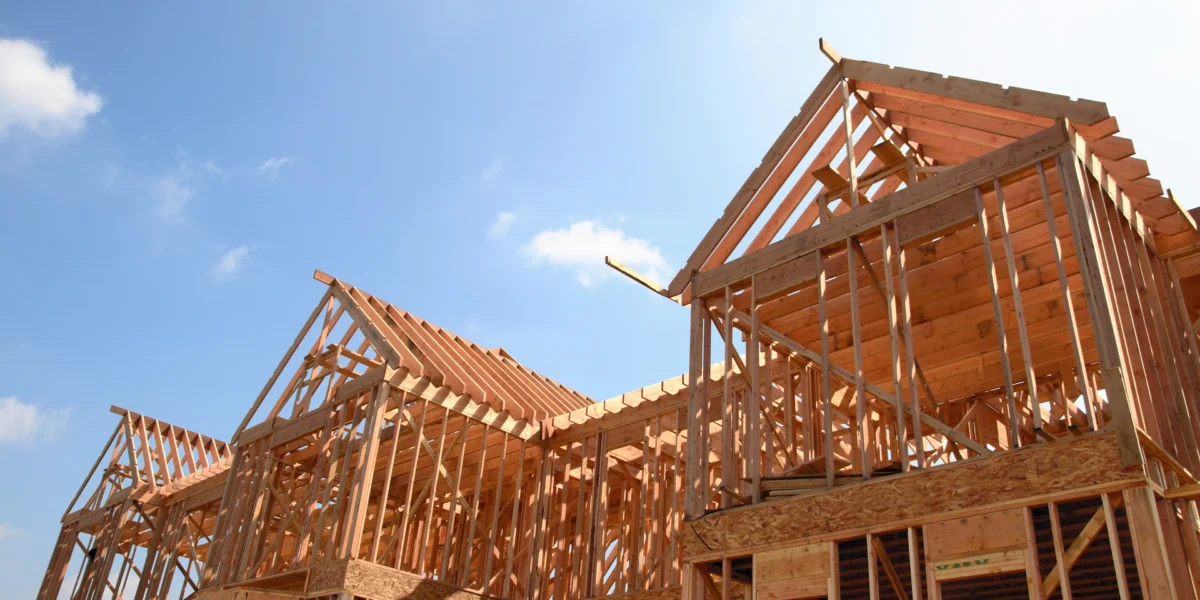
Timber frame housing refers to a construction method that utilises a framework of timber beams and columns to support the building’s structure. This technique has been used for centuries and remains popular due to its versatility and environmental benefits. Unlike traditional construction methods that rely heavily on concrete and steel, timber frame housing uses sustainably sourced wood, making it a renewable and eco-friendly option.
The framework of a timber frame house typically consists of large wooden beams that are interconnected to form a sturdy skeleton. These beams are often left exposed, giving timber frame homes a distinct aesthetic appeal. The spaces between the timber framework are filled with insulation materials and covered with various cladding options, resulting in highly energy-efficient buildings. The natural insulating properties of wood further enhance the energy performance of timber frame homes.
Timber frame housing is not only environmentally friendly but also offers numerous practical advantages. Timber is a lightweight material, which makes it easier and faster to construct buildings compared to traditional methods. Additionally, timber frame buildings are highly durable and can withstand various environmental conditions. With advancements in construction techniques and materials, modern timber frame homes can meet and even exceed the performance standards of conventional buildings.
Environmental Benefits of Timber Frame Construction
Timber frame construction offers a myriad of environmental benefits that make it a standout choice for sustainable housing. One of the most significant advantages is its ability to sequester carbon. Trees absorb carbon dioxide from the atmosphere as they grow, storing it within their wood. When timber is used in construction, this carbon remains locked within the building materials, effectively removing it from the atmosphere for the lifespan of the structure.
Timber frame construction offers significant environmental benefits due to its renewable nature. When sourced from responsibly managed forests, timber is a sustainable material that can be replenished through reforestation, unlike finite resources such as steel and concrete. Sustainable forestry practices also help maintain ecological balance and support biodiversity.
In addition, timber requires far less energy to produce than steel or concrete, resulting in lower embodied carbon during construction. Timber frame buildings are also highly energy‑efficient in use, reducing ongoing energy demand. Together, these advantages make timber frame construction an effective way to minimise environmental impact.
Energy Efficiency in Timber Frame Homes
Energy efficiency is a key attribute of timber frame homes that contributes to their sustainability. The natural insulating properties of wood play a crucial role in maintaining comfortable indoor temperatures with minimal energy use. Timber has a low thermal conductivity, meaning it does not readily transfer heat. This characteristic helps to keep homes warm in the winter and cool in the summer, reducing the need for artificial heating and cooling.
In addition to the inherent insulating properties of wood, timber frame homes can be designed to maximise energy efficiency. The spaces between the timber framework can be filled with high-performance insulation materials, further enhancing the building’s thermal performance. Modern construction techniques also allow for airtight building envelopes, which minimise heat loss and improve overall energy efficiency. These features collectively result in homes that require less energy to maintain comfortable living conditions.
Timber frame homes can also incorporate renewable energy technologies, such as solar panels and heat pumps, to further reduce their reliance on fossil fuels. By generating their own renewable energy, these homes can achieve net-zero energy status, where the total amount of energy used by the building is equal to the amount of renewable energy generated on-site. This not only reduces carbon emissions but also lowers energy costs for homeowners, making timber frame homes an economically and environmentally sustainable choice.
Timber Frame vs. Traditional Building Materials
When comparing timber frame construction to traditional building materials such as concrete and steel, several advantages become apparent. One of the most significant differences is the environmental impact. Concrete and steel production are highly energy-intensive processes that release large amounts of carbon dioxide into the atmosphere. In contrast, timber production requires much less energy and results in lower greenhouse gas emissions.
Another key difference is the renewable nature of timber. While concrete and steel are finite resources, timber can be sustainably harvested and replenished through responsible forestry practices. This renewable aspect of timber makes it a more sustainable choice for construction, especially in the context of growing concerns about resource depletion and environmental degradation.
Timber frame construction also offers advantages in terms of construction speed and flexibility. Timber is a lightweight material that is easier to transport and handle on-site, reducing the time and labour required for construction. The prefabrication of timber components in controlled environments further streamlines the building process, resulting in shorter construction times and reduced costs. Additionally, timber frame structures can be easily modified or extended, providing greater flexibility for future changes or expansions.
Overcoming Challenges in Timber Frame Construction
While timber frame construction offers many benefits, it also presents challenges. Timber can be vulnerable to moisture and pests, potentially affecting structural integrity. However, modern treatments and improved construction methods have greatly reduced these risks. Properly treated timber resists decay, and well‑designed building systems ensure effective moisture control, enhancing long‑term durability.
Fire performance is another common concern. Timber can perform predictably in fire conditions. Large structural elements form a protective char layer when exposed to flames, which insulates the inner core and helps maintain strength. In some cases, this can offer more predictable performance than steel, which may weaken rapidly at high temperatures.
Cost can also be perceived as a barrier. Although material costs may sometimes be higher, faster build times, reduced labour requirements, and long‑term energy savings can offset the initial investment. With the right design and best practices, timber frame construction remains a practical and resilient solution.
The Future of Timber Frame Housing in Sustainable Development
At Maple Timber Frame, we see the future of sustainable development rooted firmly in timber construction.
We believe collaboration is key to unlocking timber’s full potential. By working closely with developers, architects, and policymakers – and by championing sustainable forestry and continuous innovation – we are helping to accelerate the transition to low‑carbon construction.
For us, timber frame housing is more than a construction method; it is a clear and achievable pathway to zero carbon living and a more sustainable built environment – delivering high‑performance homes from Cumbria to Bedfordshire.